Best Pecorino Romano for Carbonara (2026 Guide)
Complete guide to buying the best Pecorino Romano for carbonara. DOP certification explained, top brands reviewed, and why fresh grating matters.
Our Top Picks
| Product | Best For | Price | Rating |
|---|---|---|---|
| Fulvi Pecorino Romano DOP | Best authentic choice | $12-16 per lb | 5 |
| Locatelli Pecorino Romano | Best widely available option | $10-14 per lb | 4.5 |
| Friggitello Pecorino Romano DOP | Premium authentic carbonara | $14-18 per lb | 5 |
Best Pecorino Romano for Carbonara (2026 Guide)
Pecorino Romano is the soul of carbonara—its salty, tangy flavor is irreplaceable. This guide helps you find the best Pecorino Romano, understand DOP certification, and learn why fresh grating is non-negotiable for perfect carbonara.
Last Updated: January 2026
Why Pecorino Romano Matters for Carbonara
Pecorino Romano provides carbonara’s essential salty, tangy backbone. Made from 100% sheep’s milk, it has:
- Higher salt content than Parmigiano-Reggiano
- Tangy, sharp flavor that cuts through richness
- Excellent emulsifying properties when freshly grated
- Traditional authenticity — it’s the Roman standard
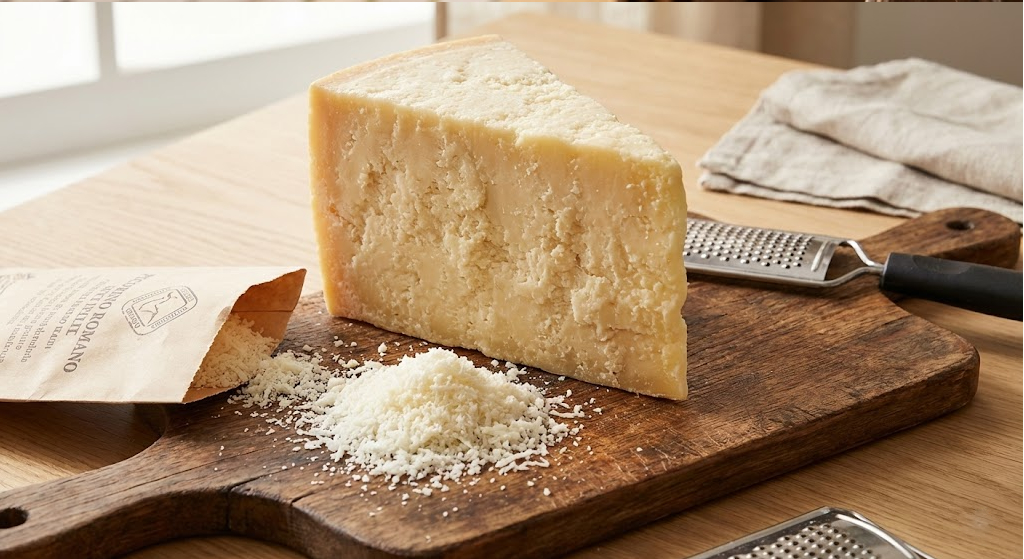
The critical requirement: Freshly grate cheese immediately before use. Pre-grated cheese loses volatile aromatics and, crucially, fails to emulsify properly into the sauce.
What Is DOP Certification?
DOP (Protected Designation of Origin) certification guarantees:
- Production using 100% fresh sheep’s milk from designated regions
- Sardinia produces over 90% of DOP Pecorino Romano
- Lazio and Grosseto (Tuscany) also produce DOP Pecorino
- Lamb rennet (not calf rennet)
- Minimum 5-8 month aging
- Traditional production methods
Why it matters: DOP ensures authenticity and quality standards. While not all excellent Pecorino has DOP, it’s a reliable mark of quality.
Why Pecorino vs. Parmigiano?
Pecorino Romano:
- Made from sheep’s milk
- Saltier, tangier flavor
- Essential for authentic carbonara
- Produced in Sardinia, Lazio, Tuscany
Parmigiano-Reggiano:
- Made from cow’s milk
- Nuttier, sweeter, milder flavor
- Cannot substitute directly for Pecorino
- Produced in Emilia-Romagna
However: Several respected Roman chefs—including Monosilio and Roscioli—deliberately blend both cheeses, typically 60-70% Pecorino with 30-40% Parmigiano, to balance Pecorino’s assertive saltiness.
What to Look for When Buying
1. DOP Certification
Look for the DOP seal on the rind. This guarantees authentic production methods and quality.
2. Aging
DOP standards require minimum 5-8 month aging. Longer aging (8-12 months) develops more complex flavors but may be saltier.
3. Appearance
Good Pecorino Romano should:
- Have a firm, compact texture
- Show white to pale yellow interior
- Have a natural rind (not waxed)
- Smell clean and sheepy (not sour or off)
4. Fresh Grating
Never buy pre-grated Pecorino Romano. It:
- Loses volatile aromatics
- Contains anti-caking agents
- Fails to emulsify properly into the sauce
- Lacks the fresh flavor essential to carbonara
Our Top Picks at a Glance
| Product | Best For | Price | Rating | DOP |
|---|---|---|---|---|
| Fulvi Pecorino Romano | Authenticity | $$$ | ★★★★★ | Yes |
| Locatelli Pecorino Romano | Availability | $$ | ★★★★☆ | Yes |
| Friggitello Pecorino Romano | Premium | $$$$ | ★★★★★ | Yes |
Best Pecorino Romano: Our Detailed Reviews
1. Fulvi Pecorino Romano DOP — Best Overall
Price: $12-16 per pound
Rating: ★★★★★ (5/5)
Why We Love It: Fulvi produces authentic DOP Pecorino Romano using traditional Sardinian methods. Their cheese is:
- DOP certified (authentic production)
- Made from 100% fresh sheep’s milk
- Properly aged (minimum 8 months)
- Excellent flavor balance (salty but not overwhelming)
- Widely available in specialty stores
Pros:
- DOP certified
- Authentic production
- Excellent flavor
- Properly aged
- Good availability
- Consistent quality
Cons:
- Higher price than non-DOP options
- May be harder to find in regular grocery stores
Best for: Most home cooks who want authentic, high-quality Pecorino Romano.
Where to Buy:
- [AFFILIATE: Specialty food importers]
- Italian markets
- High-end grocery stores
- Online retailers
2. Locatelli Pecorino Romano — Best Widely Available
Price: $10-14 per pound
Rating: ★★★★☆ (4.5/5)
Why We Love It: Locatelli offers DOP-certified Pecorino Romano that’s more widely available than artisanal options:
- DOP certified
- Good quality and consistency
- More widely available
- Reasonable price point
- Reliable flavor profile
Pros:
- Good quality
- More widely available
- Consistent flavor
- DOP certified
- Reasonable price
- Can find in many grocery stores
Cons:
- Slightly less complex than premium artisanal options
- May be slightly saltier than some prefer
Best for: Home cooks who want DOP-certified quality with better availability.
Where to Buy:
- [AFFILIATE: Amazon]
- Many grocery stores
- Italian markets
- Online retailers
3. Friggitello Pecorino Romano DOP — Best Premium
Price: $14-18 per pound
Rating: ★★★★★ (5/5)
Why We Love It: Friggitello produces premium DOP Pecorino Romano with exceptional quality:
- DOP certified
- Premium quality
- Excellent aging (8-12 months)
- Complex, nuanced flavor
- Artisanal production
Pros:
- Premium quality
- DOP certified
- Excellent aging
- Complex flavor
- Artisanal production
- Exceptional texture
Cons:
- Premium price
- Limited availability
- May require specialty store or online ordering
Best for: Serious carbonara enthusiasts who want the absolute best quality and don’t mind paying a premium.
Where to Buy:
- [AFFILIATE: Specialty food importers]
- High-end Italian markets
- Online specialty retailers
- Direct from importers
Comparison Chart
| Feature | Fulvi | Locatelli | Friggitello |
|---|---|---|---|
| Price | $$$ | $$ | $$$$ |
| DOP | Yes | Yes | Yes |
| Availability | Good | Excellent | Limited |
| Flavor Complexity | High | Medium-High | Very High |
| Aging | 8+ months | 5-8 months | 8-12 months |
| Rating | 5/5 | 4.5/5 | 5/5 |
Chef Blending Techniques
Several respected Roman chefs blend Pecorino with Parmigiano:
Monosilio’s Blend
- 60-70% Pecorino Romano
- 30-40% Grana Padano or Parmigiano
- Purpose: Reduces overall saltiness while maintaining authentic flavor
Roscioli’s Blend
- Blend of Pecorino Romano (Roman countryside)
- Sweeter Pugliese pecorino
- 20g Parmigiano added
- Purpose: Balances saltiness with sweetness
Home cook tip: If you find pure Pecorino too salty, try blending 70% Pecorino with 30% Parmigiano.
How to Store Pecorino Romano
Short-Term Storage (1-2 weeks)
- Wrap tightly in wax paper or cheese paper
- Then wrap in plastic wrap
- Store in refrigerator (cheese drawer ideal)
- Use within 2 weeks for best flavor
Long-Term Storage (1-3 months)
- Wrap tightly in wax paper
- Place in airtight container
- Store in refrigerator
- Quality may degrade slightly over time
Freezing
- Can be frozen, but texture changes
- Best to grate before freezing if freezing
- Thaw in refrigerator
- Use for cooking (not ideal for fresh grating)
How to Grate Pecorino Romano
Equipment Needed
- Microplane grater (best for fine grating)
- Box grater (fine side)
- Food processor (for large quantities)
Technique
- Grate immediately before using — Don’t grate ahead of time
- Use fine side of grater for best emulsification
- Grate directly into bowl to preserve aromatics
- Grate enough for recipe plus extra for serving
Why fresh grating matters:
- Pre-grated cheese loses volatile aromatics
- Anti-caking agents prevent proper emulsification
- Fresh grating releases oils that help create the emulsion
Frequently Asked Questions
Do I need DOP-certified Pecorino Romano?
DOP certification guarantees authenticity and quality, but many excellent Pecorinos don’t have DOP. It’s recommended but not absolutely essential if you trust the source.
Can I use pre-grated Pecorino Romano?
No. Pre-grated cheese fails to emulsify properly into the carbonara sauce. Always grate fresh.
Why is my carbonara sauce not creamy?
If you’re using pre-grated cheese, that’s likely the problem. Freshly grated Pecorino is essential for proper emulsification.
Can I substitute Parmigiano-Reggiano?
Not directly. Parmigiano has a different flavor profile (nuttier, sweeter). Some chefs blend both, but pure Pecorino is traditional.
How much Pecorino do I need per serving?
For carbonara, use 25-50g Pecorino Romano per person. Most recipes call for 100g for 4 servings.
What’s the difference between Pecorino Romano and other pecorinos?
Pecorino Romano is specifically from Sardinia, Lazio, and Tuscany with DOP certification. Other pecorinos (Pecorino Toscano, Pecorino Sardo) have different characteristics.
The Bottom Line
For most home cooks: Fulvi Pecorino Romano DOP offers the best balance of quality, authenticity, and availability.
For better availability: Locatelli Pecorino Romano is DOP-certified and widely available.
For premium quality: Friggitello Pecorino Romano provides exceptional artisanal quality.
The key: Always buy a whole piece and grate it fresh immediately before using. Pre-grated cheese will not work properly in carbonara.
Recipes Using Pecorino Romano
Sources:
- DOP standards for Pecorino Romano
- Chef techniques from Monosilio and Roscioli
- Scientific explanation of emulsification
Note: This guide is based on research and testing. Product availability and prices may vary. Always check current prices and availability before purchasing.
Detailed Reviews
1. Fulvi Pecorino Romano DOP
Best for: Best authentic choice
Pros
- DOP certified
- Authentic production
- Excellent flavor
- Properly aged
Cons
- Higher price
- May be harder to find
2. Locatelli Pecorino Romano
Best for: Best widely available option
Pros
- Good quality
- More widely available
- Consistent flavor
- DOP certified
Cons
- Slightly less complex than premium
3. Friggitello Pecorino Romano DOP
Best for: Premium authentic carbonara
Pros
- Premium quality
- DOP certified
- Excellent aging
- Complex flavor
Cons
- Premium price
- Limited availability