# Pasta Carbonara Recipe (All Shapes)
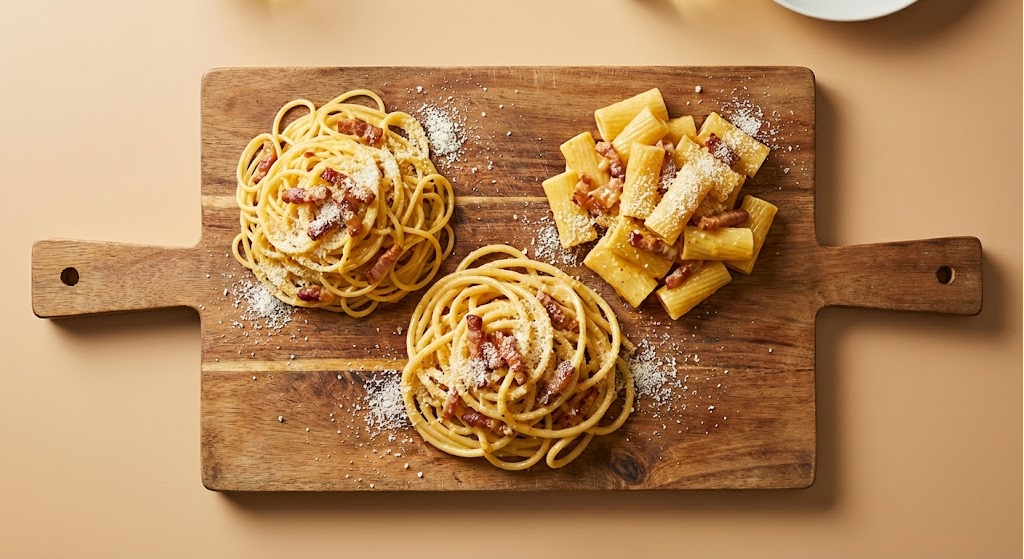
This authentic carbonara recipe works beautifully with any pasta shape—from classic spaghetti to hearty rigatoni. The technique adapts slightly based on the pasta you choose, but the core principles remain the same: five ingredients, proper temperature control, and confident tossing.
Why This Recipe Works for All Shapes
Different pasta shapes offer different advantages for carbonara:
- Spaghetti — Traditional choice, excellent sauce adherence, easy to toss
- Rigatoni — Holds sauce in its tubes, hearty texture, perfect for thicker sauces
- Mezze Maniche — Roman favorite, shorter tubes that catch sauce beautifully
- Bucatini — Hollow spaghetti that traps sauce inside
- Fettuccine — Wide ribbons that carry sauce well
The key is adjusting your technique slightly based on the shape's surface area and sauce-holding capacity.
Ingredients You'll Need
For the Carbonara
- 400g pasta — Choose your favorite shape (see recommendations below)
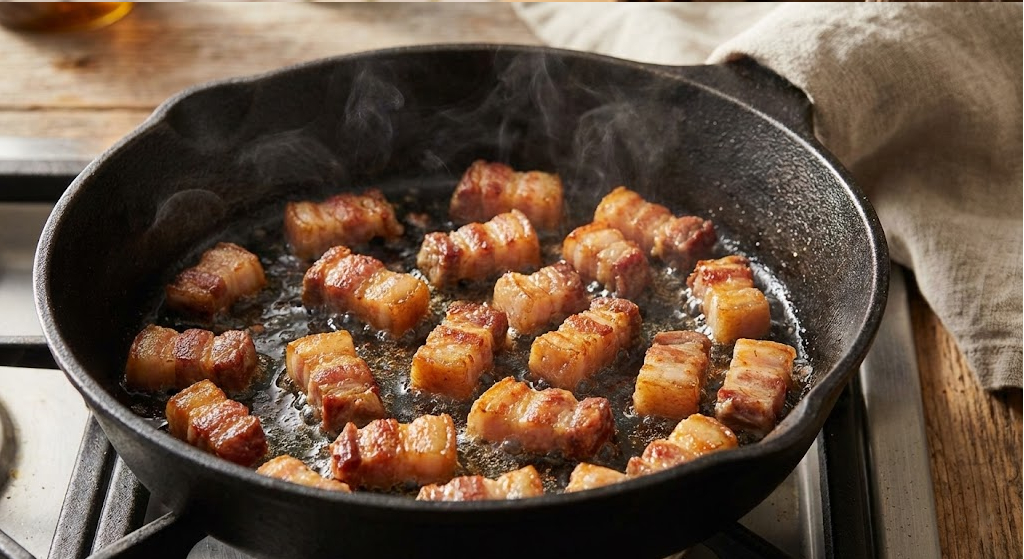
- 200g guanciale — Cured pork jowl, cut into 1cm cubes or strips
- 4 large egg yolks — Fresh, room temperature
- 2 whole eggs — Added for creaminess
- 100g Pecorino Romano — Freshly grated, never pre-shredded
- Black pepper — Freshly cracked, generous amount
Ingredient Notes:
- Guanciale is essential for authentic flavor. If unavailable, pancetta works as a substitute, but guanciale's higher fat content creates a better emulsion.
- Freshly grate the Pecorino Romano just before using—pre-grated cheese won't emulsify properly.
- Use the best quality eggs you can find—they're the star of the sauce.
Best Pasta Shapes for Carbonara
Traditional Choices
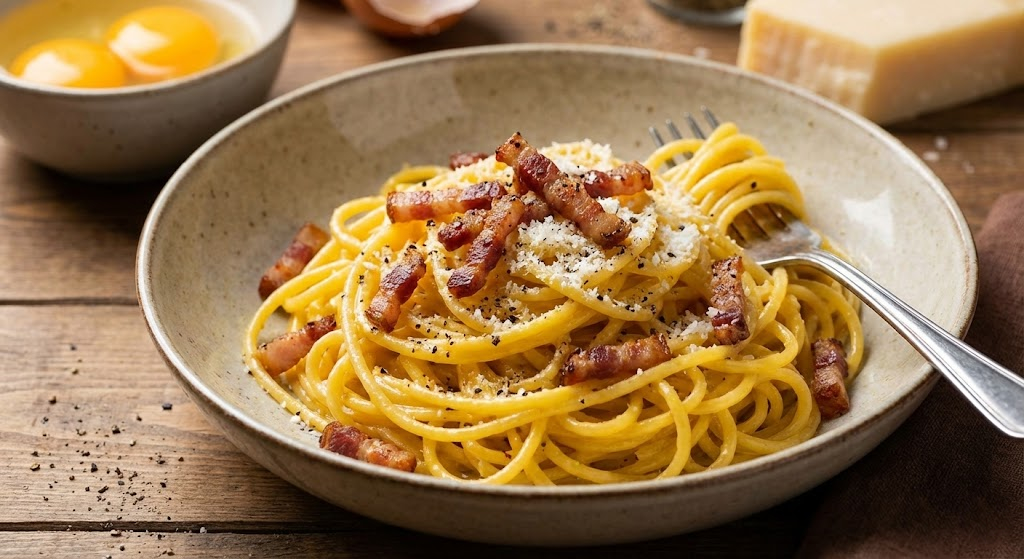
Spaghetti (Classic)
- Most traditional shape
- Excellent for learning the technique
- Easy to toss and coat evenly
- Chef Monosilio uses 280g spaghetti for 4 servings
Rigatoni (Hearty)
- Tubes catch sauce inside
- Great for thicker, creamier sauces
- Satisfying texture
- Popular in Roman trattorias
Mezze Maniche (Roman Favorite)
- Shorter tubes, perfect size
- Excellent sauce adherence
- Traditional Roman choice
- Chef Roscioli uses 180g spaghettoni (similar shape) for 2 servings
Alternative Shapes
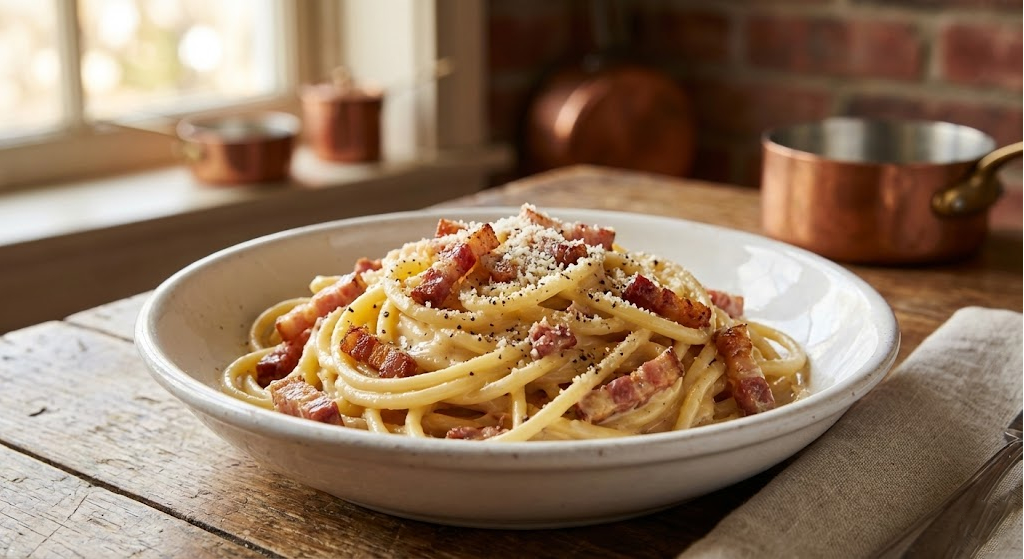
Bucatini — Hollow spaghetti that traps sauce inside
Fettuccine — Wide ribbons, good for creamy sauces
Penne — Works well, though less traditional
Fusilli — Spirals hold sauce in crevices
Pro Tips for Perfect Pasta Carbonara
- Choose the right shape for your preference — Spaghetti for tradition, rigatoni for heartiness, mezze maniche for authenticity
- Reserve plenty of pasta water — You'll need it for the emulsion
- Work quickly — Have everything ready before you start combining
- Temperature control is everything — Pan must be off heat before adding eggs
- Toss vigorously — The motion creates the creamy emulsion
- Use fresh, quality ingredients — This simple dish relies on ingredient quality
- Serve in warm bowls — Keeps the pasta hot longer
Common Mistakes to Avoid
❌ Using a hot pan — Always remove from heat before adding eggs
❌ Not reserving pasta water — Essential for the sauce
❌ Overcooking the pasta — Should be al dente, not soft
❌ Stirring instead of tossing — Tossing creates the emulsion
❌ Using pre-grated cheese — Won't emulsify properly
❌ Serving too late — Carbonara thickens as it cools
Shape-Specific Techniques
For Spaghetti
- Use tongs to lift and create circular tossing motions
- The long strands should wrap around each other, coating evenly
- Work quickly to prevent sticking
For Rigatoni/Mezze Maniche
- Use a wooden spoon to toss, ensuring sauce enters the tubes
- The tubes should be filled with creamy sauce
- Slightly more pasta water may be needed for tube shapes
For Bucatini
- Similar to spaghetti but be gentle—hollow center can break
- The hollow center traps sauce beautifully
- Toss carefully to avoid breaking strands
Variations to Try
Rigatoni Carbonara
Use rigatoni for a heartier, more substantial dish. The tubes catch the sauce beautifully.
Mezze Maniche Carbonara
The traditional Roman choice—shorter tubes that are perfect for carbonara.
Bucatini Carbonara
Hollow spaghetti that traps sauce inside for an extra creamy experience.
What to Serve With Pasta Carbonara
- Simple green salad — Fresh, crisp greens balance the richness
- Crusty bread — For sopping up any remaining sauce
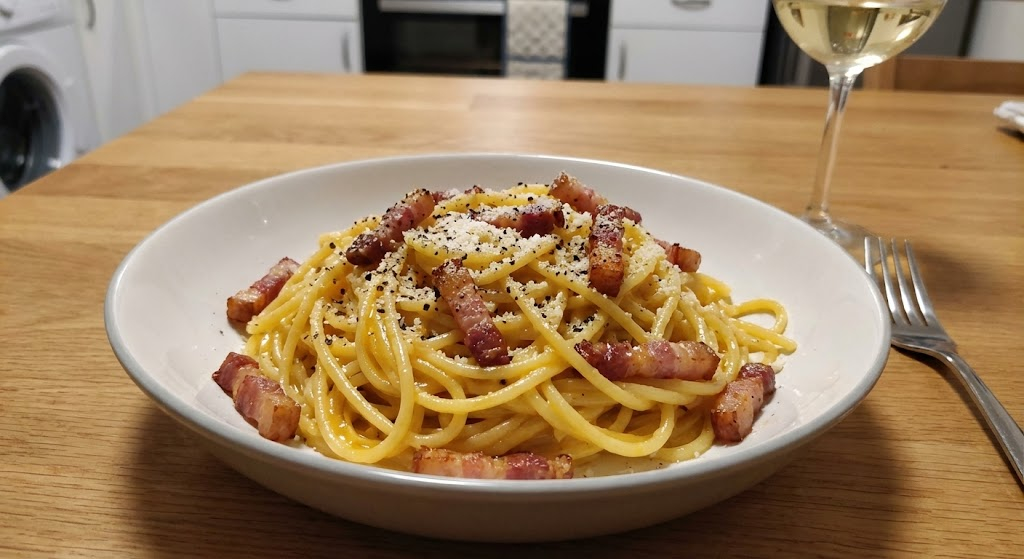
- White wine — A crisp Italian white like Pinot Grigio
- Nothing — Carbonara is a complete meal on its own
Storage and Reheating
Storage
Carbonara is best served immediately. If you must store it, refrigerate in an airtight container for up to 2 days, though the texture will change.
Reheating
Reheat gently in a pan with a splash of water or milk over low heat, stirring constantly. The sauce may break slightly, but it's still delicious.
Can You Freeze It?
Not recommended. The egg-based sauce doesn't freeze well and will become grainy when thawed.
Frequently Asked Questions
What's the best pasta shape for carbonara?
Spaghetti is traditional, but rigatoni and mezze maniche are excellent choices. The best shape is the one you prefer—the technique works with any shape.
Can I use different pasta shapes in the same recipe?
Yes! The recipe works with any pasta shape. Just adjust cooking time based on the shape's thickness.
Why does the technique change for different shapes?
It doesn't change much—mainly the tossing method. Tube shapes benefit from spoon-tossing to get sauce inside, while long shapes use tongs for circular motion.
Do I need different amounts of ingredients for different shapes?
No, the ingredient ratios stay the same. The 400g pasta, 200g guanciale, and egg ratios work for any shape.
Which shape holds sauce best?
Rigatoni and mezze maniche hold sauce excellently in their tubes. Bucatini's hollow center also traps sauce beautifully.
More Recipes You'll Love
- [Classic Spaghetti Carbonara](/recipes/classic-carbonara/) — The traditional version
- [Best Pasta for Carbonara](/reviews/best-pasta-carbonara/) — Complete guide to choosing pasta
- [Authentic Roman Carbonara Guide](/guides/authentic-roman-carbonara/) — Deep dive into techniques
---
Recipe tested and perfected — This recipe has been tested multiple times with various pasta shapes to ensure consistent, delicious results every time.