# Chicken Carbonara Pasta
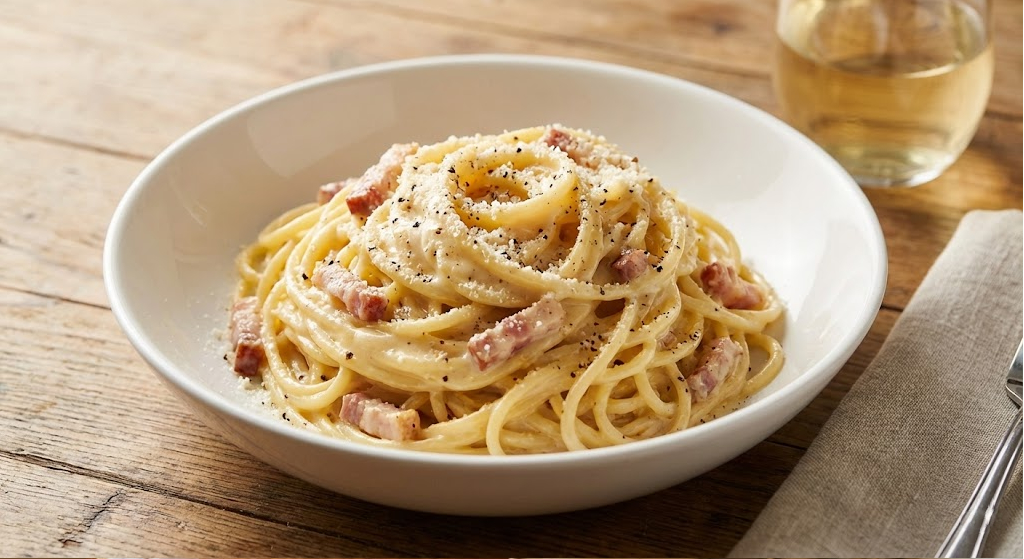
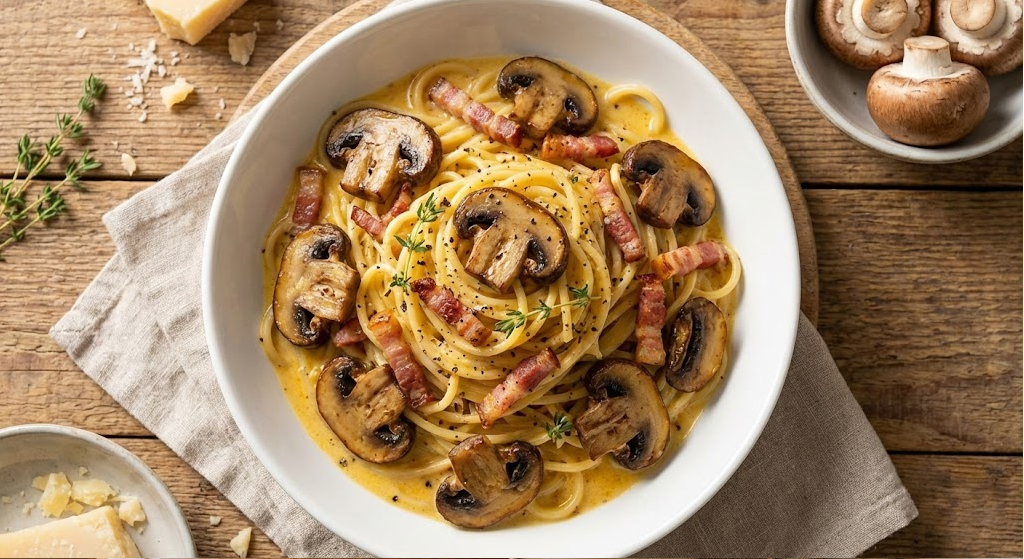
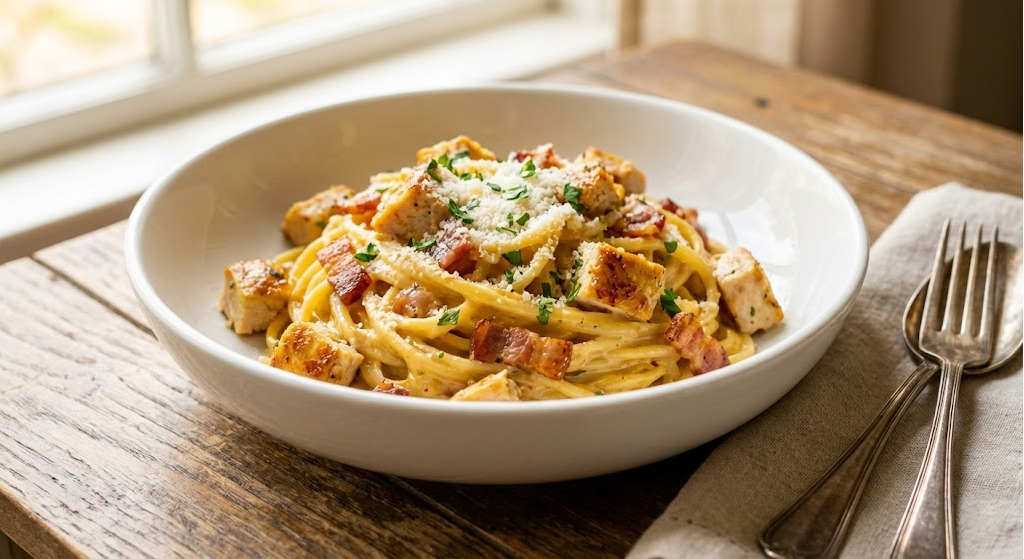
This chicken carbonara adds tender, seasoned chicken to the classic carbonara technique, creating a protein-rich variation that's perfect for a satisfying weeknight dinner. While not traditional Roman carbonara, this adaptation maintains the creamy egg emulsion while adding substantial protein.
Why This Recipe Works
This chicken variation succeeds because:
- Adds substantial protein — Chicken makes it a complete, filling meal
- Maintains carbonara technique — Proper egg emulsion, no cream
- Balanced flavors — Chicken complements pancetta/guanciale without overpowering
- Weeknight friendly — Still quick enough for busy evenings
- Satisfying texture — Tender chicken with crispy pancetta
Important Note: This is an adaptation that adds chicken to carbonara. Traditional carbonara uses only guanciale or pancetta as the protein. This recipe creates a delicious variation for those wanting more protein.
Ingredients You'll Need
For the Carbonara
- 400g spaghetti — Good quality dried pasta
- 500g boneless, skinless chicken breast — Cut into 2cm bite-sized pieces
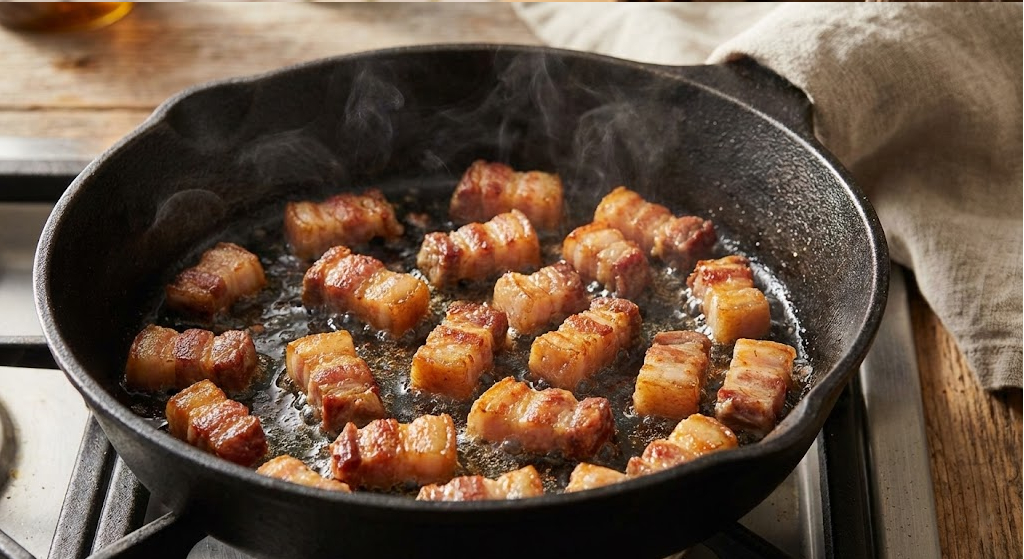
- 100g pancetta or guanciale — Cut into small cubes
- 2 tablespoons olive oil — For cooking chicken
- 4 large egg yolks — Room temperature
- 2 whole eggs — For creaminess
- 100g Pecorino Romano — Freshly grated
- Black pepper — Freshly cracked, generous amount
- 2 tablespoons fresh parsley — Chopped, for garnish
Ingredient Notes:
- Chicken: Boneless, skinless breast works best—cooks quickly and stays tender
- Pancetta/guanciale: Provides the traditional carbonara flavor base
- Cheese: Pecorino Romano is traditional, but Parmigiano-Reggiano also works
Why Chicken Works:
- Adds substantial protein
- Complements pancetta's flavor
- Cooks quickly
- Stays tender when cooked properly
Equipment Needed
- Large pot for pasta
- Large skillet or pan
- Mixing bowl (plastic or ceramic)
- Whisk or fork
- Tongs or pasta fork
- Grater (for cheese)
- Cutting board and knife
Pro Tips for Chicken Carbonara
- Don't overcook chicken — Remove when just done to keep it tender
- Cut chicken evenly — Same size pieces cook at the same rate
- Season chicken well — Salt and pepper before cooking
- Use the same pan — Chicken juices add flavor to pancetta
- Reserve pasta water — Critical for creamy sauce
- Work quickly — Have everything ready before combining
- Serve immediately — Carbonara waits for no one
Common Mistakes to Avoid
❌ Overcooking chicken — Makes it dry and tough
❌ Crowding the pan — Cook chicken in batches if needed
❌ Adding eggs to hot pan — Pan must be off heat first
❌ Not tempering eggs — Add hot pasta water to eggs before combining
❌ Using pre-grated cheese — Won't emulsify properly
❌ Skipping pancetta — Provides essential carbonara flavor
Variations to Try
Thigh Version
Use boneless, skinless chicken thighs instead of breast—more flavor and stays juicier.
Spicy Version
Add red pepper flakes when cooking chicken or pancetta.
Herbed Version
Add fresh thyme or rosemary when cooking chicken.
Single-Serve Version
Divide all ingredients by 4 for a perfect single serving.
Double Recipe
Simply double all ingredients. Use a larger pan and work in batches if needed.
What to Serve With Chicken Carbonara
- Simple green salad — Fresh greens balance richness
- Crusty bread — Perfect for sopping up sauce
- Roasted vegetables — Broccoli or asparagus
- Nothing — Carbonara is a complete meal
Storage and Reheating
Storage
Best served immediately. If storing, refrigerate in airtight container for up to 2 days.
Reheating
Reheat gently in a pan with a splash of water over low heat, stirring constantly. Chicken may become slightly drier, but still tasty.
Can You Freeze It?
Not recommended. The egg-based sauce doesn't freeze well, and chicken can become rubbery.
Frequently Asked Questions
Is this authentic carbonara?
No, this is an adaptation that adds chicken. Traditional carbonara uses only guanciale or pancetta as the protein. This recipe creates a delicious variation for those wanting more protein.
Can I use chicken thighs instead?
Yes! Boneless, skinless thighs work well and stay juicier than breast. Adjust cooking time as needed.
Can I skip the pancetta?
The pancetta provides essential carbonara flavor. Without it, this becomes a different dish (chicken pasta with egg sauce).
How do I know when chicken is done?
Chicken should reach 165°F (74°C) internal temperature. It should be golden-brown on the outside and no longer pink inside.
Can I make this ahead of time?
No, carbonara must be served immediately. The sauce thickens as it cools.
Can I use leftover cooked chicken?
Yes! If using leftover cooked chicken, skip the chicken cooking step and add it when combining everything.
More Recipes You'll Love
- [Classic Spaghetti Carbonara](/recipes/classic-carbonara/) — The authentic version
- [Easy Carbonara Recipe](/recipes/easy-carbonara/) — Simplified authentic version
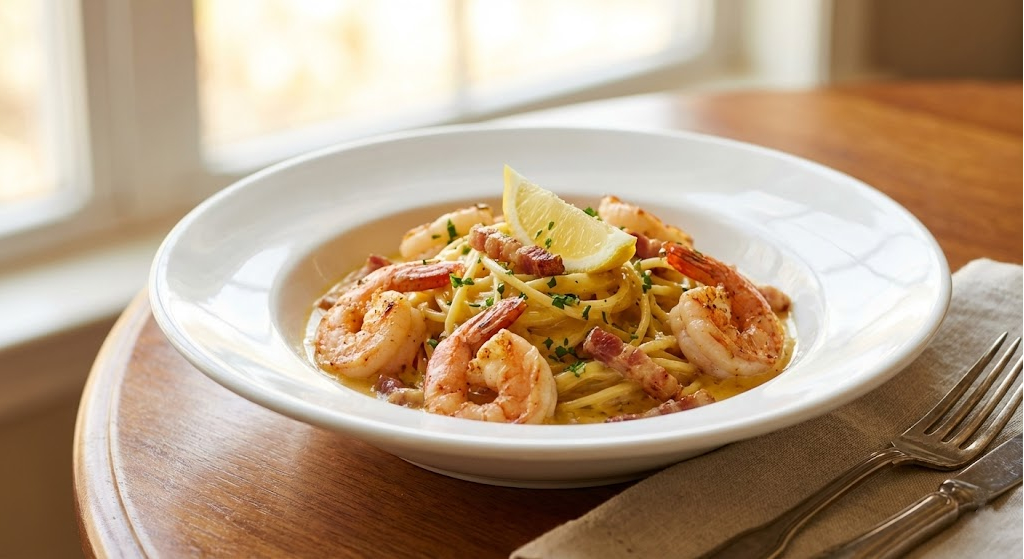
- [Shrimp Carbonara Recipe](/recipes/shrimp-carbonara/) — Seafood variation
- [What Is Carbonara?](/guides/what-is-carbonara/) — Complete guide to authentic carbonara
---
Recipe tested and perfected — This chicken variation has been tested multiple times to ensure it works reliably. While not traditional, it's a delicious protein-rich adaptation that maintains the carbonara technique.