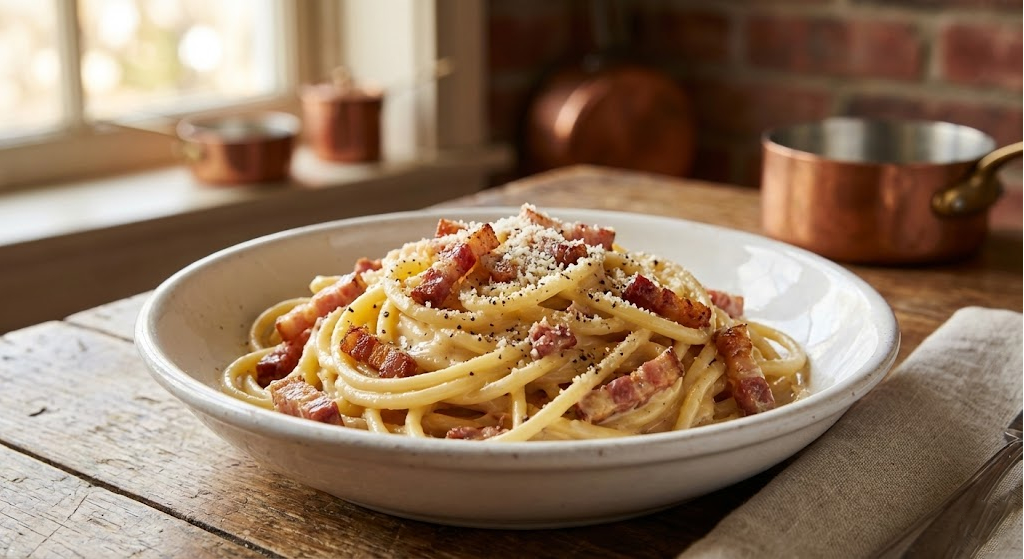
# Bacon Carbonara (American Style)
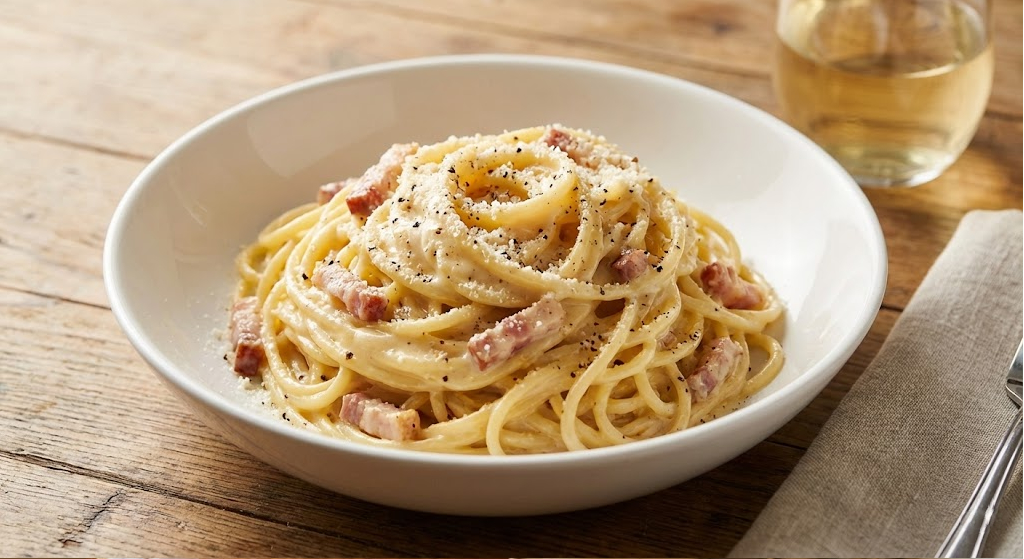
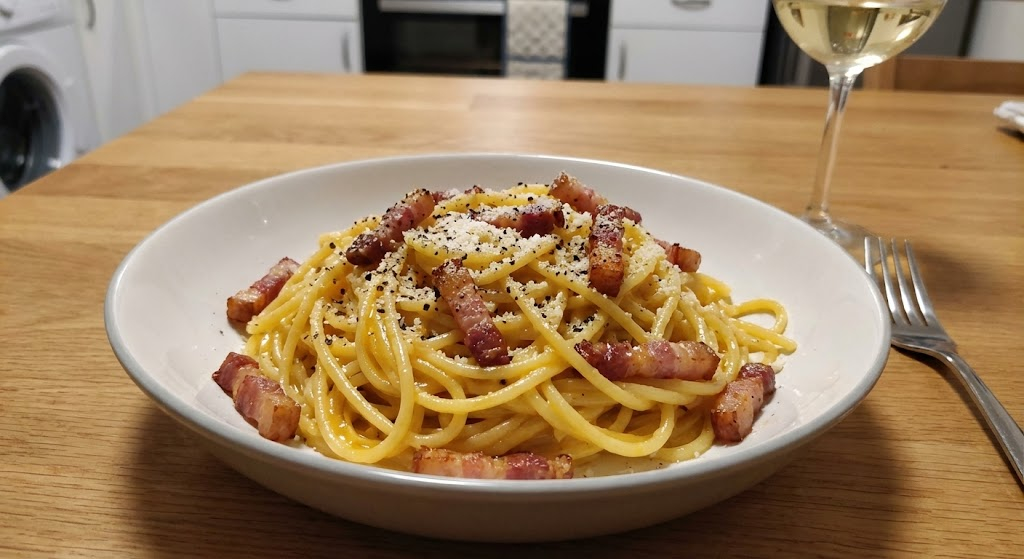
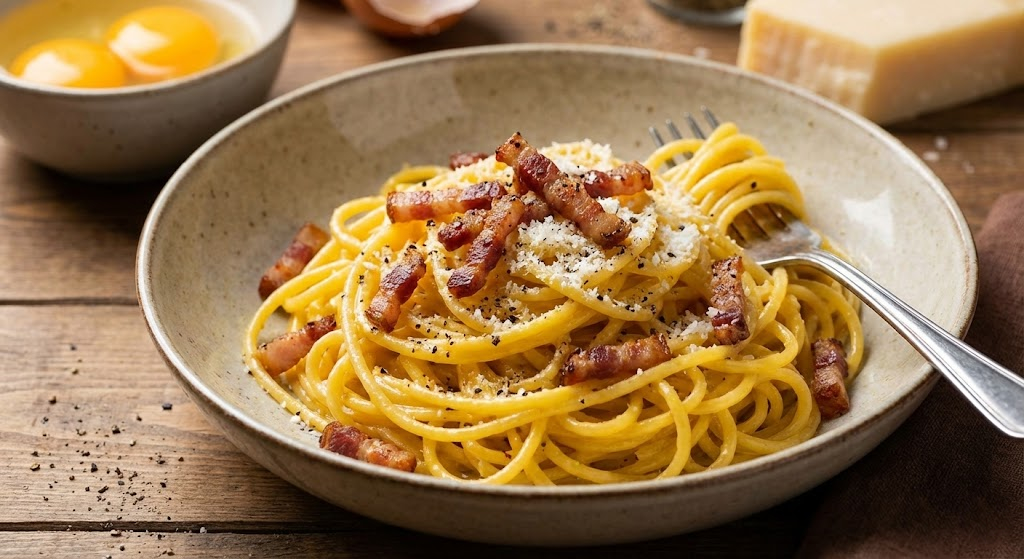
This American-style carbonara uses bacon instead of guanciale—a delicious adaptation that's more accessible while acknowledging it's not the traditional Roman version. If you can't find guanciale or pancetta, this recipe delivers creamy, satisfying carbonara using ingredients you likely already have.
Why This Recipe Works
While not authentic Roman carbonara, this American adaptation:
- Uses accessible ingredients — Bacon is available everywhere
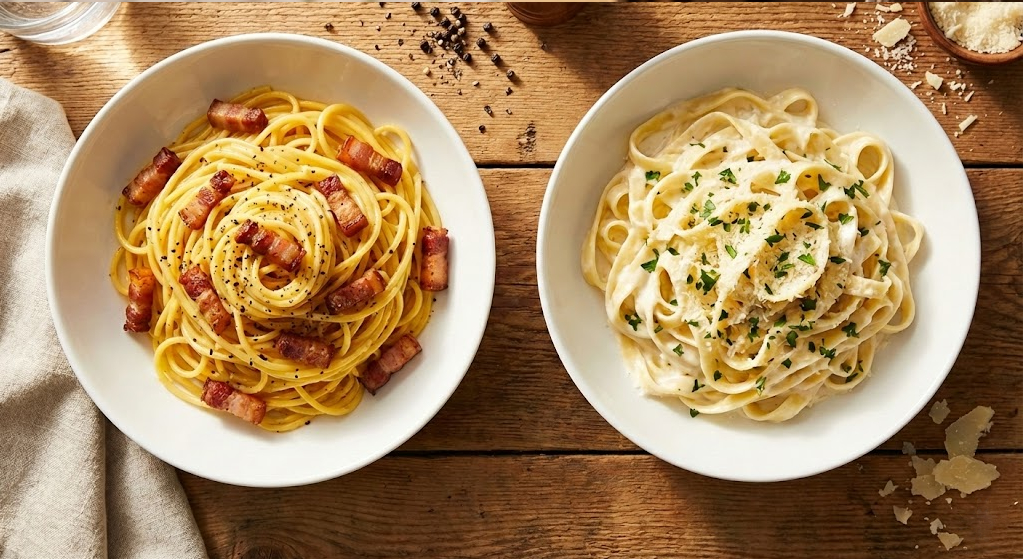
- Maintains the technique — Proper egg emulsion, no cream
- Acknowledges adaptation — Honest about being non-traditional
- Still delicious — Creamy, satisfying pasta dish
- Works with bacon's smoke — Recipe accounts for smoky flavor
Important Note: This is an American adaptation. Authentic carbonara uses guanciale (cured pork jowl), not bacon. The smoke from bacon changes the flavor profile, but this recipe works well if traditional ingredients aren't available.
Ingredients You'll Need
For the Carbonara
- 400g spaghetti — Good quality dried pasta
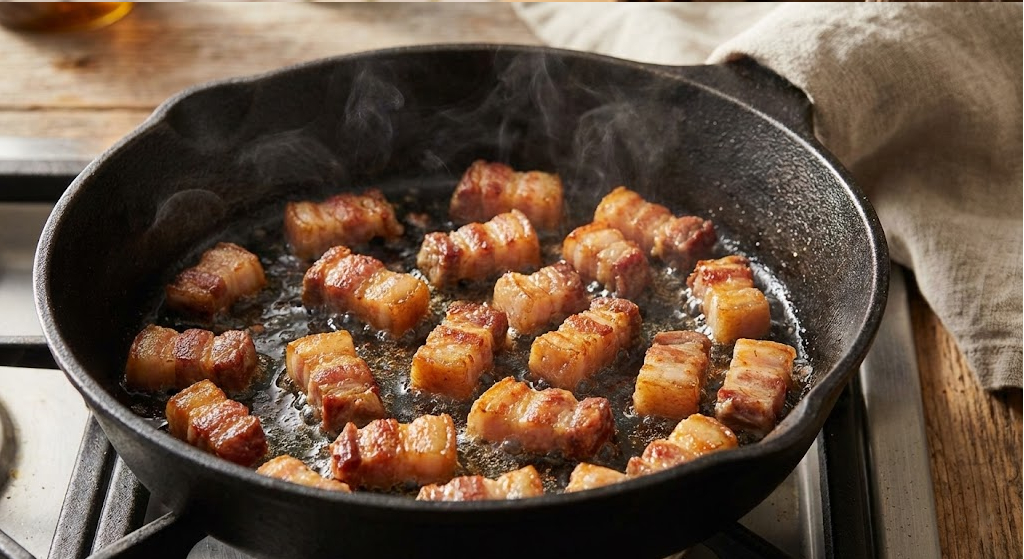
- 200g thick-cut bacon — Less-smoky varieties work best
- 3 large egg yolks — Room temperature
- 2 whole eggs — For creaminess
- 100g Parmigiano-Reggiano or Pecorino Romano — Freshly grated (Parmigiano pairs better with bacon's smoke)
- Black pepper — Freshly cracked, generous amount
Ingredient Notes:
- Bacon choice: Look for less-smoky bacon (applewood-smoked is milder than hickory)
- Cheese: Parmigiano-Reggiano's sweetness balances bacon's smoke better than Pecorino's saltiness
- Thick-cut: Provides better texture and more meat
Why Bacon Changes the Dish:
- Bacon's smoke adds a different flavor dimension
- Less fat than guanciale (may need slightly more bacon)
- More readily available but less traditional
Equipment Needed
- Large pot for pasta
- Large skillet or pan
- Mixing bowl (plastic or ceramic)
- Whisk or fork
- Tongs or pasta fork
- Grater (for cheese)
Pro Tips for Bacon Carbonara
- Choose less-smoky bacon — Applewood-smoked is milder than hickory
- Use Parmigiano — Its sweetness balances smoke better than Pecorino
- Don't drain all fat — Keep rendered fat for the emulsion
- Start in cold pan — Prevents burning before fat renders
- Reserve pasta water — Essential for creamy sauce
- Work quickly — Have everything ready before combining
- Serve immediately — Carbonara waits for no one
Common Mistakes to Avoid
❌ Using too-smoky bacon — Overpowers other flavors
❌ Draining all the fat — Need fat for emulsion
❌ Adding eggs to hot pan — Pan must be off heat first
❌ Not tempering eggs — Add hot pasta water to eggs before combining
❌ Using pre-grated cheese — Won't emulsify properly
❌ Overcooking bacon — Should be crispy, not burned
Variations to Try
Extra Smoky Version
If you love smoky flavors, use hickory-smoked bacon and increase black pepper.
Milder Version
Use applewood-smoked bacon and Parmigiano-Reggiano for a gentler flavor profile.
Single-Serve Version
Divide all ingredients by 4 for a perfect single serving.
Double Recipe
Simply double all ingredients. Use a larger pan and work in batches if needed.
What to Serve With Bacon Carbonara
- Simple green salad — Fresh greens balance richness
- Crusty bread — Perfect for sopping up sauce
- Roasted vegetables — Broccoli or Brussels sprouts
- Nothing — Carbonara is a complete meal
Storage and Reheating
Storage
Best served immediately. If storing, refrigerate in airtight container for up to 2 days.
Reheating
Reheat gently in a pan with a splash of water over low heat, stirring constantly. Texture may change slightly.
Can You Freeze It?
Not recommended. The egg-based sauce doesn't freeze well.
Frequently Asked Questions
Is this authentic carbonara?
No, this is an American adaptation. Authentic carbonara uses guanciale (cured pork jowl), not bacon. This recipe acknowledges that and provides a delicious alternative when traditional ingredients aren't available.
Can I use regular bacon instead of thick-cut?
Yes, but thick-cut provides better texture. Regular bacon works fine.
Why Parmigiano instead of Pecorino?
Parmigiano's sweetness balances bacon's smoke better. Pecorino's saltiness can clash with smoke.
Can I use turkey bacon?
Not recommended. Turkey bacon lacks the fat content and flavor needed for carbonara.
How do I know when it's done?
The sauce should be creamy and glossy, coating the pasta evenly. No visible scrambled eggs.
Can I make this ahead of time?
No, carbonara must be served immediately. The sauce thickens as it cools.
What's the difference between this and authentic carbonara?
Authentic carbonara uses guanciale (unsmoked, richer fat) and Pecorino Romano. This uses bacon (smoked, different fat profile) and often Parmigiano. The technique is similar, but the flavor profile differs.
More Recipes You'll Love
- [Classic Spaghetti Carbonara](/recipes/classic-carbonara/) — The authentic version with guanciale
- [Easy Carbonara Recipe](/recipes/easy-carbonara/) — Simplified authentic version
- [Guanciale vs Pancetta vs Bacon](/guides/guanciale-vs-pancetta-vs-bacon/) — Learn the differences
- [What Is Carbonara?](/guides/what-is-carbonara/) — Complete guide to authentic carbonara
---
Recipe tested and perfected — This American adaptation has been tested multiple times to ensure it works reliably. While not traditional, it's a delicious alternative when authentic ingredients aren't available.