Carbonara Without Cream (The Real Way)
Why authentic carbonara never uses cream and how to achieve perfect creaminess without it. Learn the science, history, and technique for authentic Roman carbonara.
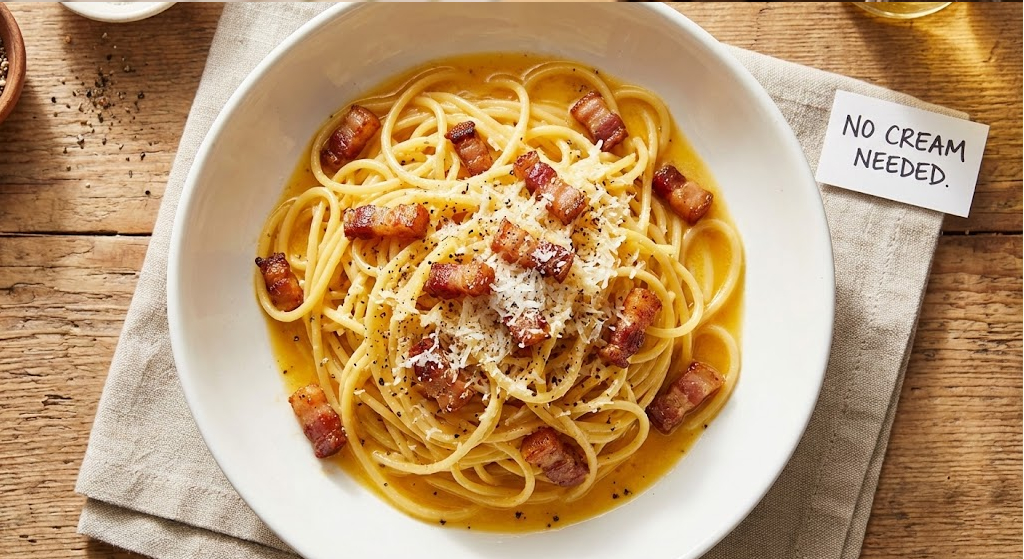
Carbonara Without Cream (The Real Way)
Authentic Roman carbonara never contains cream—the silky texture comes from emulsifying eggs, cheese, and starchy pasta water. Understanding why cream is forbidden and how to achieve creaminess without it is the key to mastering this classic dish.
Why Cream Is Forbidden in Authentic Carbonara
Every authoritative Italian source—the Accademia Italiana della Cucina, Gambero Rosso, and all respected Roman chefs—agrees: cream is absolutely forbidden in authentic carbonara.
The modern definition of authentic carbonara, codified in the 1990s, specifies just five ingredients:
- Guanciale (cured pork jowl)
- Egg yolks (and sometimes whole eggs)
- Pecorino Romano cheese
- Black pepper
- Pasta
Cream, milk, butter, garlic, onion, and herbs are all considered culinary heresy by Italian purists.
The Historical Context: Cream Was Once Common
Here’s the surprising truth: Cream was actually common in Italian carbonara recipes from the 1960s through the 1980s. Even legendary chef Gualtiero Marchesi used a quarter-liter of cream per 400g pasta in his 1989 recipe published in La Cucina Regionale Italiana.
However, the “pure” carbonara with only eggs, guanciale, and Pecorino Romano was codified in the 1990s by Roman chefs and culinary institutions. This became the modern standard for authentic carbonara.
The evolution:
- 1940s-1950s: Early recipes varied widely, some included cream
- 1960s-1980s: Cream was common in Italian recipes
- 1990s: Modern “authentic” recipe codified without cream
- Today: Cream is universally rejected by Italian purists
Modern Rejection of Cream
The modern Italian rejection of cream in carbonara was dramatically demonstrated in 2024 when Heinz launched canned carbonara with cream and pancetta in the UK. The product sparked national outrage in Italy, with:
- Italian Tourism Minister calling it “for the rats”
- Chefs condemning it as “cat food” and “a bastardisation”
- Headlines across European media
- Social media outrage from millions of Italians
This incident shows how seriously Italians take the prohibition against cream in carbonara.
How to Achieve Creaminess Without Cream
The creamy texture of authentic carbonara comes from a carefully controlled emulsion—not unlike mayonnaise, but with pasta as the canvas.
The Science of the Emulsion
Egg yolks contain approximately 10% lecithin, a phospholipid that acts as a powerful natural emulsifier. Lecithin molecules have water-loving heads and fat-loving tails, allowing them to stabilize the interface between rendered guanciale fat and pasta water.
Starchy pasta water functions as the second critical emulsifier. Dry pasta releases amylose starch during cooking, which gelatinizes when heated, increases viscosity, and helps bind fat and water together.
Temperature control is paramount. Egg yolks begin coagulating at 65°C (149°F). When diluted with pasta water, this threshold rises to approximately 80–85°C, providing a larger margin for error.
The Technique: Mantecatura
The Italian term mantecatura describes the final emulsifying step—creating the creamy sauce through vigorous agitation rather than additional ingredients.
The technique requires:
- Fat from rendered guanciale and cheese
- Starchy water as the binding medium
- Vigorous tossing (not stirring, which breaks the emulsion)
- Controlled heat—warm, residual, or none
- Speed—the dish must be served immediately
Italian chefs use a saltapasta (lightweight aluminum sauté pan) because the aluminum surface creates friction that helps release additional starch from the pasta. The tossing should continue for 30–40 seconds while gradually incorporating the egg mixture.
Step-by-Step: Making Carbonara Without Cream
1. Render the Guanciale
Start in a cold pan (this is non-negotiable). Place guanciale strips in an unheated pan, then turn heat to low or medium-low. Cook 10–15 minutes, stirring occasionally, until the fat renders clear and plentiful while the meat turns golden-brown.
2. Cook the Pasta
Cook pasta in generously salted water until al dente. Reserve at least 1 cup of pasta water before draining—this starchy water is essential.
3. Prepare the Egg Mixture
Whisk together egg yolks (and whole eggs if using), freshly grated Pecorino Romano, and generous black pepper. The cheese should be freshly grated—pre-grated cheese won’t emulsify properly.
4. Temper the Eggs
Before combining, whisk 2–3 tablespoons of hot pasta water into the egg mixture. This tempering prevents scrambling when you add it to the hot pasta.
5. Combine and Emulsify
Remove the guanciale pan from heat completely. Wait until sizzling stops. Add the hot pasta to the pan with guanciale and rendered fat. Toss to coat, then immediately add the tempered egg mixture.
Toss vigorously for 30–40 seconds, adding pasta water gradually as needed. The motion creates the emulsion—stirring breaks it.
6. Serve Immediately
Carbonara must be served immediately. The sauce continues thickening as it cools.
Common Mistakes That Lead to Adding Cream
Many home cooks add cream because they struggle with the emulsion. Here’s why and how to fix it:
Mistake 1: Scrambled Eggs
Problem: Eggs scramble when added to hot pan
Solution: Remove pan from heat, wait for sizzling to stop, temper eggs with hot pasta water first
Mistake 2: Broken Sauce
Problem: Sauce separates, looks greasy
Solution: Reserve more pasta water, toss more vigorously, ensure pan is off heat
Mistake 3: Watery Sauce
Problem: Sauce is thin and runny
Solution: Toss more vigorously to create emulsion, add more cheese if needed
Mistake 4: Not Enough Starch
Problem: Pasta water isn’t starchy enough
Solution: Use less water when cooking pasta, or cook pasta longer to release more starch
Troubleshooting Without Cream
If Your Sauce Breaks
Immediate fix:
- Add a splash of hot pasta water
- Toss vigorously
- The starch should help re-emulsify
Prevention:
- Always reserve plenty of pasta water
- Ensure pan is off heat before adding eggs
- Toss vigorously, don’t stir
- Work quickly
If Your Sauce Is Too Thick
Add hot pasta water, 1 tablespoon at a time, while tossing. The sauce should be creamy but not pasty.
If Your Sauce Is Too Thin
Toss more vigorously. The motion creates the emulsion. If still thin after vigorous tossing, you may need more cheese or less pasta water.
Why Pre-Grated Cheese Fails
Freshly grate cheese immediately before use. Pre-grated cheese:
- Loses volatile aromatics
- Contains anti-caking agents that prevent proper emulsification
- Doesn’t melt and incorporate the same way
The fresh grating is essential for the emulsion to work properly.
The Bottom Line
Authentic carbonara achieves its creamy texture through science and technique, not cream. The emulsion of eggs, cheese, and starchy pasta water creates a silky, luxurious sauce that cream can’t replicate.
Key takeaways:
- Cream is forbidden in authentic carbonara
- Creaminess comes from proper emulsion technique
- Starchy pasta water is essential
- Temperature control prevents scrambling
- Vigorous tossing creates the emulsion
- Freshly grated cheese is non-negotiable
Related Content
- Authentic Roman Carbonara Guide — Complete guide with history and science
- Easy Carbonara Recipe — Simplified technique
- How to Temper Eggs for Carbonara — Detailed technique guide
Sources:
- Accademia Italiana della Cucina — Authentic recipe definition
- Gualtiero Marchesi, La Cucina Regionale Italiana (1989) — Historical cream usage
- Heinz 2024 controversy — Modern rejection of cream
- Scientific principles of emulsion chemistry