The Definitive Guide to Authentic Roman Carbonara
Master authentic Roman carbonara with just five ingredients. Learn the science, history, and techniques from Rome's master chefs. No cream, no shortcuts—just silky perfection.
Last updated: January 25, 2026
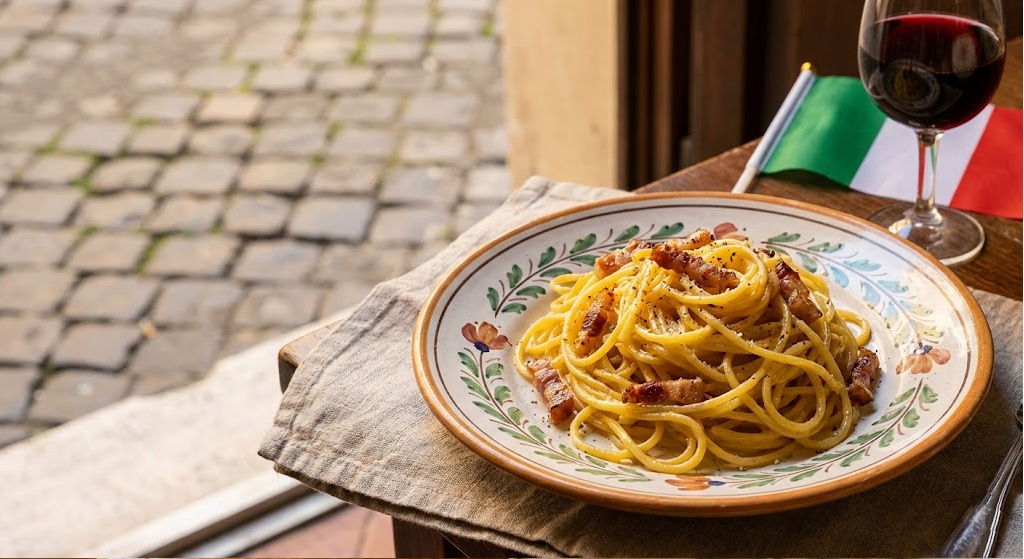
The definitive guide to authentic Roman carbonara
Carbonara demands just five ingredients—guanciale, egg yolks, Pecorino Romano, black pepper, and pasta—yet mastering this Roman classic requires understanding its surprisingly modern origins, precise science, and the techniques that separate silky perfection from scrambled failure. The dish that Italians now defend with near-religious fervor emerged only in the mid-1940s, likely from American military rations meeting Italian culinary ingenuity. Today’s “authentic” recipe, codified in the 1990s, reflects decades of refinement by Roman chefs who transformed a wartime improvisation into a global icon. Getting it right means understanding not just what goes in, but what absolutely stays out.
Carbonara is younger than your grandparents
The charcoal-worker origin story is romantic folklore—there’s no historical evidence that carbonari ever ate this dish. Food historian Luca Cesari, author of A Brief History of Pasta, states plainly: “Let’s please dispel a myth: there are no ancient progenitors of carbonara. The story of humble and industrious shepherds or charcoal miners who fill the bowl of spaghetti with eggs, guanciale and pecorino from the mists of time is as fascinating as it is unhistorical” (Cesari, A Brief History of Pasta; see also Wikipedia).
The actual timeline is remarkably recent. Carbonara is conspicuously absent from Ada Boni’s comprehensive 1930 La Cucina Romana, which includes cacio e pepe, amatriciana, and gricia—supporting the post-WWII origin theory. The first documentary mention appears in 1948 in Il Giornale di Trieste (though the original text is not digitally accessible). The first published recipe appeared in Chicago, 1952, in Patricia Bronté’s Vittles and Vice restaurant guide—not in Italy. The first Italian published recipe followed in 1954 in La Cucina Italiana, and notably called for pancetta, Gruyère, and garlic (Gambero Rosso International, source).
The most credible origin theory connects to Allied soldiers after Rome’s liberation in June 1944. American and British military rations contained bacon, powdered eggs, cheese, and cream—unfamiliar combinations to Italians but standard Anglo breakfast fare. Chef Renato Gualandi provided the most detailed account: hired to cook for a meeting between the US Fifth Army and British Eighth Army in September 1944 at the Grand Hotel Des Bains in Riccione, he recalled, “The Americans had fantastic bacon, delicious heavy cream, cheese and powdered egg yolks. I put it all together and served this pasta to the generals and officers for dinner” (Emiliaromagnanews24.it, source). While Gualandi’s account is documented, it’s important to note this is one theory among several—the exact origin remains debated by food historians.
What Italians now reject as heresy—cream in carbonara—was actually common in Italian recipes from the 1960s through 1980s. Even legendary chef Gualtiero Marchesi used 250ml of cream per 320g pasta in his 1989 recipe published in La Cucina Regionale Italiana (Ristorazioneitalianamagazine.it, source). The “pure” carbonara with only yolks, guanciale, and Pecorino Romano was codified in the 1990s, making today’s sacred tradition barely three decades old.
The authentic recipe according to Rome’s master chefs
Roman chefs approach carbonara with the precision of scientists, yet each maintains distinctive personal touches that reveal the dish’s inherent flexibility within strict parameters.
Luciano Monosilio, dubbed the “King of Carbonara,” employs a bain-marie method at 60°C (official method) to prevent scrambling (Gambero Rosso International, source). His recipe for four servings: 280g spaghetti, 4 egg yolks only, 200g guanciale, 30g Grana Padano, 20g Pecorino Romano, and 2g black pepper (Luciano Monosilio, official website). He independently cures his own guanciale, aged four months, seeking meat that’s “crisp on the outside and melty on the inside.” Notably, he mixes Pecorino with Grana Padano to reduce overall saltiness.
Roscioli Salumeria, arguably Rome’s most celebrated carbonara destination, uses premium-sourced ingredients: Paolo Parisi eggs from hens fed goat’s milk, a blend of Pecorino Romano from the Roman countryside with sweeter Pugliese pecorino, and a proprietary pepper blend combining Sarawak black, Muntok white, and Kampot red peppercorns. Their ratio for two: 180g spaghettoni, 120g guanciale, 1 whole egg + 1 yolk, 105g Pecorino, 20g Parmigiano (Identitagolose.com, source). Chef Nabil Hadj Hassen (who left Roscioli in 2021) beats eggs in a plastic bowl (better insulated than metal) and uses circular bowl movements rather than tongs to emulsify the sauce.
Arcangelo Dandini of L’Arcangelo takes perhaps the most controversial position: no black pepper at all, believing its bitter note doesn’t suit the dish (Gambero Rosso International, source). He uses only yolks, adding one more than the number of portions, and prefers his guanciale “semi-soft, without making it excessively crisp” (Reportergourmet.com, source).
Consolidated ratios per serving
| Ingredient | Range per person | Notes |
|---|---|---|
| Pasta | 70–100g | Spaghetti, rigatoni, or mezze maniche |
| Guanciale | 40–60g | Cut into 1cm strips or cubes |
| Egg yolks | 1–1.5 | Many chefs add 1 whole egg per 3–4 servings |
| Pecorino Romano | 25–50g | Freshly grated, never pre-shredded |
| Black pepper | Generous | Coarsely cracked, visible on finished dish |
What authentic carbonara never contains
Every authoritative Italian source—the Accademia Italiana della Cucina, Gambero Rosso, and all named Roman chefs—agrees on what constitutes culinary heresy. Cream is absolutely forbidden. Neither is milk, butter, garlic, onion, parsley, or any herb. Pre-grated cheese fails to emulsify properly. Fresh egg pasta is discouraged because eggs in both pasta and sauce makes the dish heavy (La Cucina Italiana, source).
When Heinz released canned carbonara with cream and pancetta in the UK in August 2024, it sparked national outrage in Italy, with chefs and officials condemning the product (Euronews, source). A French video from 2016 demonstrating “pâtes carbo” with crème fraîche (not 2024 as sometimes reported) was viewed by over a million Italians who were, according to reports, “appalled” (The Guardian, source).
The science behind the silk
Carbonara’s creamy texture emerges from a carefully controlled emulsion—not unlike mayonnaise, but with pasta as the canvas. Understanding the underlying chemistry explains why specific techniques matter.
Egg yolks contain approximately 10% lecithin, a phospholipid that acts as a powerful natural emulsifier. Lecithin molecules are amphiphilic, with water-loving heads and fat-loving tails, allowing them to stabilize the interface between rendered guanciale fat and pasta water. A single yolk can theoretically emulsify up to 250ml of oil.
Starchy pasta water functions as the second critical emulsifier. Dry pasta releases amylose starch during cooking, which gelatinizes when heated with water, increases viscosity, and helps bind fat and water together. The less water used when cooking pasta, the more concentrated the starch—which explains why some chefs deliberately use minimal cooking water.
Temperature control is paramount. Egg yolks begin coagulating at 65°C (149°F) and fully set at 70°C (158°F). When diluted with pasta water, this threshold rises to approximately 80–85°C, providing a larger margin for error. The goal: keep the sauce below coagulation temperature while achieving a custardy consistency.
The mantecatura technique
The Italian term mantecatura describes the final emulsifying step—creating the creamy sauce through vigorous agitation rather than additional ingredients. The technique requires:
- Fat from rendered guanciale and cheese
- Starchy water as the binding medium
- Vigorous tossing (not stirring, which breaks the emulsion)
- Controlled heat—warm, residual, or none
- Speed—the dish must be served immediately
Italian chefs use a saltapasta (lightweight aluminum sauté pan) because the aluminum surface creates friction that helps release additional starch from the pasta. The tossing should continue for 30–40 seconds while gradually incorporating the egg mixture.
Guanciale is not negotiable
Guanciale—cured pork jowl aged at least three months—provides both the rendered fat that forms the emulsion base and a distinctive flavor profile impossible to replicate with substitutes. The name derives from guancia, Italian for “cheek.”
| Characteristic | Guanciale | Pancetta | Bacon |
|---|---|---|---|
| Cut | Jowl/cheek | Belly | Belly/back |
| Fat content | Highest | Medium | Varies |
| Smoking | Never | Rarely | Always |
| Flavor | Rich, herbal | Milder, sweeter | Smoky |
Chef Mattia Agazzi from Massimo Bottura’s Gucci Osteria notes: “The smoke from bacon can dominate the other flavors in the dish, so it’s best to get guanciale if you can find it.”
The rendering technique is non-negotiable: start in a cold pan. Place guanciale strips in an unheated pan, then turn heat to low or medium-low. Cook 10–15 minutes, stirring occasionally, until the fat renders clear and plentiful while the meat turns golden-brown—crispy outside, slightly chewy inside. This slow rendering prevents burning the exterior before fat melts and produces the fragrant, clean-flavored fat essential to the emulsion.
Pecorino Romano carries the soul of the dish
Pecorino Romano—sheep’s milk cheese with DOP (Protected Designation of Origin) certification—provides carbonara’s essential salty, tangy backbone. The DOP standards guarantee production using 100% fresh sheep’s milk from designated regions (Sardinia produces over 90%, with Lazio and Grosseto in Tuscany), lamb rennet, and minimum five-to-eight-month aging.
Parmigiano-Reggiano cannot substitute directly. Made from cow’s milk in Emilia-Romagna, Parmesan has a nuttier, sweeter, milder profile that fundamentally changes the dish’s character. However, several respected Roman chefs—including Monosilio and Roscioli—deliberately blend both cheeses, typically 60–70% Pecorino with 30–40% Parmigiano, to balance Pecorino’s assertive saltiness.
The critical requirement: freshly grate cheese immediately before use. Pre-grated cheese loses volatile aromatics and, crucially, fails to emulsify properly into the sauce.
The egg debate reveals carbonara’s flexibility
Even among Roman traditionalists, the yolk-to-whole-egg ratio varies considerably—evidence that “authentic” carbonara permits more variation than purists often admit.
Vincenzo’s Plate (Italian chef from Rome) offers a useful formula: 1 egg yolk + 30g Pecorino per 100g pasta, plus 1 whole egg added to the total (Vincenzo’s Plate, website). For 500g pasta, this means 5 yolks + 1 whole egg + 150g Pecorino.
The scientific rationale for favoring yolks: they contain the emulsifying lecithin and coagulate at higher temperatures than whites, providing more margin for error. Whites cook faster, become stringy, and make the sauce “watery or goopy.” Yolks create richer color and creamier texture.
Yet even Italy’s premier cooking site, GialloZafferano, recommends whole eggs, stating “Be sure to use the whole eggs, not just the yolks” (GialloZafferano, source)—demonstrating that the debate remains unsettled even in Italy.
Why carbonara fails and how to save it
Scrambled eggs—the cardinal sin—result from adding the egg mixture to a pan that’s too hot. Prevention requires removing the pan completely from heat, waiting until sizzling stops, and tempering the eggs by whisking 2–3 tablespoons of hot pasta water into the mixture before combining. The pan’s residual heat, combined with the hot pasta, gently cooks the eggs without reaching coagulation temperature.
Greasy, broken sauce indicates emulsification failure, typically from insufficient starchy pasta water or inadequate tossing. The fix: reserve at least 1 cup of pasta water, transfer pasta with tongs (bringing some water along), and toss vigorously until the sauce becomes glossy.
Dry pasta results from too little sauce or serving too late. Carbonara must be served immediately—the sauce continues thickening as it cools. Keep reserved pasta water on hand to loosen if needed.
The dish’s simplicity makes rescue difficult. If eggs begin scrambling, immediately add cold pasta water to halt cooking—though the damage may be irreversible. The best strategy remains prevention through temperature control, proper tempering, and continuous motion during the final assembly.
Complete Recipe: Authentic Roman Carbonara
Ingredients (for 4 servings)
- 400g spaghetti (or rigatoni, mezze maniche)
- 200g guanciale, cut into 1cm cubes or strips
- 4 large egg yolks
- 2 whole eggs (or use 6 yolks total for richer sauce)
- 100g Pecorino Romano, freshly grated
- Black pepper, freshly cracked, generous amount
Equipment:
- Large pot for pasta
- Large skillet or pan (aluminum saltapasta ideal)
- Mixing bowl (plastic or ceramic)
- Tongs or pasta fork
- Whisk
Step-by-Step Instructions
Step 1: Prepare the Egg Mixture
In a large bowl (plastic or ceramic, not metal), whisk together:
- 4 egg yolks
- 2 whole eggs
- 80g of the freshly grated Pecorino Romano (reserve 20g for serving)
- Generous amount of freshly cracked black pepper
Whisk until smooth and well combined. Set aside at room temperature.
Step 2: Render the Guanciale
Critical: Start in a cold pan. Place guanciale cubes in an unheated pan, then turn heat to medium-low. Cook for 10-15 minutes, stirring occasionally, until:
- Fat renders clear and plentiful
- Guanciale is golden-brown
- Crispy on the outside, slightly chewy inside
Remove from heat and set aside. Keep the rendered fat in the pan.
Step 3: Cook the Pasta
Bring a large pot of generously salted water to a rolling boil. Add spaghetti and cook until al dente (about 1 minute less than package directions).
Before draining, reserve at least 1 cup of pasta water—this starchy water is essential for the emulsion.
Step 4: Temper the Eggs
Whisk 2-3 tablespoons of hot pasta water into the egg mixture. This tempering prevents scrambling when you add it to the hot pasta.
Step 5: Combine and Emulsify (Mantecatura)
- Remove the guanciale pan from heat completely (if not already off)
- Wait 30 seconds—you should see the sizzling stop
- Add the drained pasta to the pan with guanciale and rendered fat
- Toss to coat the pasta with the fat
- Add the tempered egg mixture over the pasta
- Toss vigorously with tongs for 30-40 seconds, creating a circular motion
- Add pasta water gradually (2-3 tablespoons at a time) while continuing to toss
- Continue tossing until the sauce becomes creamy and glossy
Visual cues:
- Sauce should be creamy, not watery
- No visible scrambled egg pieces
- Pasta should be well-coated
- Sauce should have a glossy sheen
Step 6: Serve Immediately
Divide among warm bowls. Top with the remaining grated Pecorino Romano and a generous crack of black pepper. Serve immediately—carbonara waits for no one.
Frequently Asked Questions
Does authentic carbonara have cream?
No. Authentic Roman carbonara never contains cream. The creamy texture comes from emulsifying eggs, cheese, and starchy pasta water. The Accademia Italiana della Cucina and all authoritative Italian sources prohibit cream in authentic carbonara.
Can I use pancetta instead of guanciale?
Yes, pancetta works as a substitute, though guanciale is more authentic. Guanciale has higher fat content and richer flavor. If guanciale isn’t available, high-quality pancetta is an acceptable alternative.
Why did my carbonara scramble?
Scrambled eggs happen when the pan is too hot. Always remove the pan completely from heat before adding the egg mixture, wait until sizzling stops, and temper the eggs with hot pasta water first. See our troubleshooting guide for detailed solutions.
Can I use Parmigiano instead of Pecorino?
While Pecorino Romano is traditional, some respected Roman chefs (including Monosilio and Roscioli) blend both cheeses, typically 60-70% Pecorino with 30-40% Parmigiano, to balance saltiness. Using only Parmigiano changes the dish’s character significantly.
What pasta shape is best for carbonara?
Spaghetti is traditional, but rigatoni and mezze maniche also work excellently. The key is using pasta with good sauce-adhering qualities. See our complete guide to pasta shapes for carbonara.
How do I know when the sauce is done?
The sauce should be creamy and glossy, coating the pasta evenly. No visible scrambled eggs, and the sauce should have a silky texture. If it’s too thick, add more pasta water. If too thin, toss more vigorously.
Can I make carbonara ahead of time?
No, carbonara must be served immediately. The sauce continues thickening as it cools, and the texture changes. It’s best made fresh.
Why is my sauce greasy or broken?
A broken sauce indicates emulsification failure. Fix by adding a splash of hot pasta water and tossing vigorously. Prevention: reserve plenty of pasta water, ensure pan is off heat, and toss vigorously (don’t stir).
Related Content
- Best Guanciale to Buy — Complete buyer guide
- Best Pecorino Romano — Cheese recommendations
- How to Temper Eggs for Carbonara — Detailed technique
- How to Render Guanciale Perfectly — Step-by-step guide
- The Mantecatura Technique — Mastering the emulsion
- What Is Carbonara? — Complete introduction
Conclusion
Authentic Roman carbonara succeeds through disciplined simplicity: five ingredients, precise temperature control, and confident technique. The dish’s surprisingly recent origins—emerging from postwar improvisation and codified only in the 1990s—challenge notions of timeless tradition, yet this history makes carbonara no less remarkable. What matters is understanding why each element exists: guanciale’s rendered fat creates the emulsion base, egg yolks provide lecithin and richness, Pecorino delivers essential salt and tang, starchy pasta water binds everything together, and black pepper adds visual and aromatic contrast.
The “authentic” recipe permits more variation than fundamentalists acknowledge—whole eggs versus yolks only, cheese blends versus pure Pecorino, spaghetti versus rigatoni—but the boundaries are real. Cream, garlic, onion, and parsley transform carbonara into something else entirely, however tasty that something else might be. Master the technique, respect the ingredients, and serve immediately. The Romans have been perfecting this dish for about eighty years. With proper attention to the science and the tradition, you can create something worthy of Testaccio.
Sources Cited:
- Luca Cesari, A Brief History of Pasta — Historical debunking
- Renato Gualandi account — 1944 origin theory (one of several)
- Ada Boni, La Cucina Romana (1930) — Absence of carbonara
- Patricia Bronté, Vittles and Vice (1952) — First published recipe
- La Cucina Italiana (1954) — First Italian recipe
- Gualtiero Marchesi, La Cucina Regionale Italiana (1989) — Historical cream usage
- Accademia Italiana della Cucina — Authentic recipe definition
- Luciano Monosilio — Chef techniques
- Roscioli Salumeria — Chef techniques
- Arcangelo Dandini — Chef techniques
- Vincenzo’s Plate — Home cook formula
- GialloZafferano — Whole egg recommendation
- Heinz 2024 controversy — Modern rejection of cream